What Are the Benefits of Flexibility in the Workplace?

This is part one in a three-part series about flexibility in the Canadian workplace which was originally published on TechTalent.ca.
Each year at The Canadian Workplace Culture Index, we conduct research and explore key trends to understand how Canadians’ experiences in the workplace differ. This year we partnered with researchers at UBC to enhance and improve our report.
As we prepared to conduct our 2022 research earlier this year, we wanted to analyze the workplace experience of Canadians while focusing on current major trends in people and culture including flexibility. In this three-part series, we’ll explore the benefits of flexibility, define modern flexibility, and explore what our data reveals about flexibility for different Canadians.
For any organization, providing flexibility requires a mature workforce and a level of trust between employees and leadership that is often lacking in some organizations and industries. If team members’ work can be measured and quantified it will be easier to provide flexibility while holding people to a standard of production. For those that are measured by revenue such as salespeople or those that are measured by billable hours, it is a lot easier for leaders to provide flexible options. Trust and communication are vital to successfully creating a flexible workplace.
Many leaders fear moving away from the usual nine to five believing that it will harm their business. However, studies into flexible workplaces show the opposite. A 10-year-old study by Stanford economist Nicholas Bloom of more than 16,000 employees found those who were able to work remotely reported higher job satisfaction and took fewer sick days than their office-based colleagues. Recently, Vodafone shifted to an agile working strategy and saw increases in productivity and employee engagement as a result. They’ve even gone as far as creating a mini Flexible Working eBook.
Offering flexibility in the workplace enables your organization to attract and retain top talent. The demand among younger workers for a less rigid work schedule continues to grow. According to research by Capability Jane, 92% of millennials selected flexibility as their top priority when looking for a job. Somewhat surprisingly, the same is true at the other end of the age demographic where a majority of those over 50 stated that they wanted to ease into retirement via part-time work first. Only 17% of those over 50 favour traditional retirement plans.
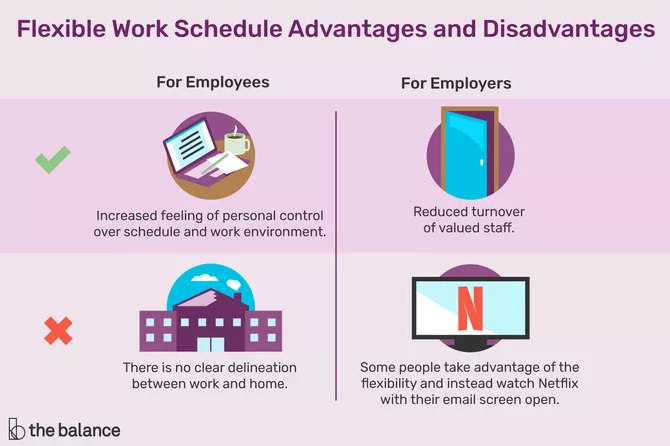
Often the benefits of having our teams on inflexible arrangements are taken for granted while the potential negatives are emphasized There are a number of proven benefits in providing flexibility. Flexibility offers employers a number of key benefits including:
- Enhancing workplace morale and motivating employees
- Encouraging employee loyalty
- Attracting top talent
The benefits of flexibility for employees are also compelling and include:
- Reducing burnout
- Enhancing health and wellness
- Boosting productivity
- Improving morale
- Prioritizing families
At the Canadian Workplace Culture Index, we recently completed our annual research into the state of workplace culture in Canada we asked a number of key questions about flexibility and then looked at those results through demographic lenses for ethnicity, age, location, and more. In a future post in this series, we’ll reveal some of the key insights and differences for Canadians when it comes to flexibility.
In part two of this series, we’ll explore exactly what flexibility means and what it looks like in practice. Here’s a preview of what we’ll explore in part three, the data on flexibility for Canadians. As you review these results consider the nature of the different types of employment that men and women make undertake in Canada. Men report having more flexibility in only one way when they work.
How are you experiencing the benefits of flexibility individually or in your team or workforce?
Company Culture Begins During Recruiting and Onboarding

In the current employment market, company culture is an important differentiator for organizations looking to recruit and retain top talent. While this fact is well known, employees continue to feel overlooked, unappreciated, unheard, or even bullied. Companies, particularly in the tech sector, that work to foster a positive company culture will reap the rewards, experiencing improved recruitment and retention, higher morale, better teamwork and increased productivity.
A positive company culture, however, cannot simply be willed into existence. Each day, it must be defined, fostered, lived, demonstrated, and communicated. For new employees, this process doesn’t begin on day one, it actually starts much earlier.
Company Culture and the Tech Sector
The tech sector’s influence on company culture cannot be overlooked. Images of hoodie-wearing CEOs or high-paid employees huddled around the foosball table first served as fodder for pop-culture parody but were actually indicative of things to come. In the broader labour market, work-life balance has increasingly been prioritized by employees, while companies recruit for soft skills in an effort to foster a culture of collaboration and communication.
Defining Your Company Culture
It’s imperative that company culture be communicated to new or potential employees, but before this can be done it must properly be understood internally. Leadership should discuss it openly, and consult with employees throughout the company.
Does current practice align with stated goals? Oft-competing values and variables such as work-life balance, innovation, teamwork, process, chain of command, individualism and the leeway to experiment should be addressed openly and honestly. This clarity will inform the recruitment and onboarding processes.
Communicating Company Culture to Candidates
It is important that recruiting with company culture in mind does not become confused with recruiting for homogeneity. In one well known case study from the UK, a company removed all identifiable information including names and age from applicants’ submissions and kept things like hobbies. The existing team were largely cyclists and their human proclivity to homogeneity showed through as most new hires going forward were also cyclists. Study after study shows the cultural and economic value that diversity of culture and thought brings to the workplace. What is important, however, is that candidates are given a true description of what they can expect when they arrive.
Technology workers are often drawn to innovative, fast-paced environments, but this does not make them immune to burnout. What measures does your company take to ensure balance? Only when this is communicated accurately can both sides truly decide whether there’s a good fit.
Job descriptions must also be carefully constructed. Those who arrive at work and are surprised by the day-to-day nature of their job may be disillusioned, leading to poor morale and high turnover, to the detriment of the company as a whole.
Companies should develop unambiguous materials to showcase company culture in advance. This is done in two ways. First, the things within an organization’s control such as their website, careers page, job descriptions, and social media content they put out. Secondly, the things outside of an organization’s control must be considered, these include third party employer review sites like Glassdoor, employee social media, and product and service review sites like G2.
Ensuring that an organization is aware of these areas is especially important so you don’t get caught unaware by a well-researched and important hire. Many hiring managers will address negatives directly while aligning expectations with internal realities. Doing so will not only help both parties avoid disappointment, but can help the company stand out from their competitors and attract the interest of more high-calibre candidates.
Recruiting and Interviewing for Soft Skills
Recruiters have come to realize that it’s easier to retool for hard skills such as technical know-how than it is to instill qualities such as patience, communication skills, and the ability to work in teams.
Companies that know what so-called ‘soft skills’ they’re looking for in a candidate should be open about it with candidates and in job descriptions. Additionally, psychometric testing is being increasingly used to determine what personality traits candidates will bring to the table. This is another way companies can be proactive about company culture.
Promote Teamwork and Communication During the Onboarding Process
Companies that value teamwork and collaboration should demonstrate this during the recruitment and onboarding stages. Having candidates meet team members from various departments will give them a greater sense of company culture and will provide the company with additional perspectives on the candidates.
After hiring, new employees should be provided with information about the internal communications process and what resources are available to them should they have questions. Mentors and ‘onboarding buddies’ are valuable in helping people learn the ropes and develop professionally, both technically and culturally.
The more individuals a new hire meets in the early going, and the more they learn about the collaborative environment, the better equipped they will be to contribute to the team as a whole.
Company culture can no longer be considered a backburner issue, or something that just happens organically. Forward-looking companies in sectors such as tech will benefit greatly when the culture of their workplace is optimized for innovation, problem-solving, and collaboration. Working to achieve this is not an event, but an ongoing process. The earlier it begins, the better, especially for new hires.
Kemp Edmonds is the Managing Director of The Canadian Workplace Culture Index.
Workplace Trends Impacting Tech During The Great Resignation

Canada’s tech industry continues to grow, as does its need for talent. According to a recent report by the Innovation Economy Council, the Canadian tech industry lost a big portion of its international tech talent due to pandemic border closures. Now Canadian companies are struggling to attract foreign talent to move North.
Understanding the trends impacting the workplace and the labour market is fundamental to remaining competitive in both recruiting and retention.
Decrease in Foreign Talent
Before the pandemic, international talent was flocking to Canada’s booming tech sector. Toronto had the second-largest talent boom next to Silicon Valley. Employees were becoming more and more attracted to Canada due to the country’s diverse and open reputation. However, the pandemic forced international borders to close for an extended time, causing this boom to slow down.
The pandemic also led to a large-scale career reconsideration, with record numbers of workers voluntarily leaving their positions. Reasons include backlogged retirements, burnout, trepidation over returning to the office and general ‘pandemic epiphanies’.
Recently, we at the Canadian Workplace Culture Index partnered with the Angus Reid Institute to poll employees across Canada from workplaces of various sizes and industries. One particular finding jumps off the page: 60 percent of respondents indicated that a 10 percent raise would sufficiently entice them to leave their current job for the same position elsewhere. Needless to say, this is a very concerning situation for CEOs.
Company Culture
Company culture can be a differentiator if it’s prioritized. Unfortunately, many companies seem unable or unwilling to do so. Thirty percent of respondents believe that people get away with bullying in their organization, while more than a third think that senior managers don’t make an effort to listen to, check in, or connect with employees.
Many companies find themselves in a vicious circle: exits leave them short-staffed, which leaves remaining personnel to deal with increasing workloads, leading to further burnout and more exits.
The tech industry is certainly not immune. While there may be no magic solution, communication goes a long way. Dialogue and resources surrounding mental health and Justice, Equity, Diversity and Inclusion (JEDI) send a powerful signal to employees and can move the needle on company loyalty.
Remote, Hybrid and In-Person Working Models
Some prefer working from home, while others thrive in an office environment. One thing is for certain: everybody now has an opinion. Companies that lack flexibility will find themselves at a competitive disadvantage when recruiting.
Tech is ahead of the curve in this regard, with many in the industry already accustomed to remote work. While those in other industries fumble around with Zoom buttons, it may not be technical aspects that create a challenge within tech, but cultural ones. Communication, collaboration and teamwork are key, and companies must find successful approaches to facilitating them remotely.
Another consequence of the remote workforce is the untethering of physical proximity from recruiting. As a result, compensation expectations will become de-linked from geography.
Managing Five Generations of Workers
Traditionalists, Baby Boomers, Gen X, Millennials and Gen Y are all present in today’s workplace. While tech is forward-looking by nature, it’s important to establish mentorships and facilitate the exchange of knowledge.
Equally important is providing each generation with a fulfilling environment. For all of the discussion surrounding generational differences, studies show that the desire for flexibility, work-life balance and employers who reflect employee values spans generations.
Evolving Benefits and Perks Paradigm
Benefits packages are becoming increasingly personal. Investment matching, personal development programs, home office budgets, child care and flexible vacation packages are among popular perks. When competing to recruit and retain top talent during an employee’s market, nothing is off the table!
Soft Skills are Hard to Ignore
It goes without saying that the technology industry requires technical skills. What’s also irrefutable is that much of this specific know-how has a shelf life. Like those in other industries, tech companies are wisely emphasizing softer skills such as communication, organization, problem-solving, project management and resourcefulness. Technology may impact the day-to-day operations of the workplace, but these aptitudes will continue to be relevant.
Though not simple, the path forward to creating a workforce that is resilient against the factors that have led to workplace attrition boil down to creating a bond between company and employee. Team members want to feel appreciated through salaries, creative benefits packages, JEDI initiatives, flexibility, and two-way communication and they want to know that the companies that they work for prioritize work-life balance and happiness. Those that do these things will position themselves as leaders in recruitment and retention.
Assessment and certification processes, like the ones we conduct at the Canadian Workplace Culture Index, can help measure and improve company culture. While there are unique challenges affecting today’s workplace, staffing chief among them, there are also incredible opportunities for those who rise to the challenge.
Kemp Edmonds is the Managing Director of The Canadian Workplace Culture Index.
Subscribe to:
Posts (Atom)


