3 easy steps to make your Blogger blog a Website
 |
| By: Scott Beale Laughing Squid. Remixed under Creative Commons License. |
The 3 steps are explained in detail below but here they are if you are wondering what they are:
- Eliminate the Blogger Navbar
- Add a Favicon
- Use a custom URL
1. Eliminate the Blogger NavBar


Ok now open the find on page feature of your browser. Find this text string: "]]>" you should find two of them. On the line just before the first ]]> add this: "#navbar { display: none; }". It should look like this:
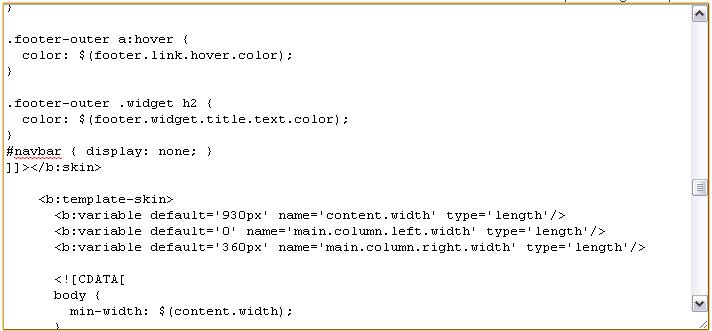
Now click "Save Template" at the bottom and Voila! The nav bar is gone!
2. Adding a Favicon
A favicon is a cool little thing. What is it? Check out your browser's address bar or the tab right now and you should see a little icon I made in Paint that is a red KE and a light blue background with an outline unless you are using Safari which sometimes mucks up favicons. On a tabbed browser these are seen on the tabs. Ever wonder how to get one? Wonder no longer.
First you need to decide on an image. It can be anything but remember it's going to be tiny (16 x 16 pixels) so make sure it is visible and means something. You can use Paint, Photoshop or Gimp to create an image that is 16 x 16. In some instructions that's all you have to do but sometimes the image needs to be converted to a format called ".ico".
To do that simply download Imagicon for PC or Favicon Generator for Mac both are free software. Open your image in this program and save it as a 16x16 .ico file. Now that you have your favicon it's time to get it uploaded and in use.
To upload the photo simply open up a new blog post or any post and click the "insert image" button and upload the image. Once the image is uploaded you can delete it from the post as it is now in your Picasa web album that's associated with your blog. Now click the "Insert Image" button again. This time click "From Picasa Web Albums" the image you uploaded should appear right there. Right click it and copy image URL.
Copy the text below this and replace 'IMAGE URL' with the URL of your image from above.
<link href="IMAGE URL" rel="shortcut icon" type="image/vnd.microsoft.icon/"/>
Take this finished snippet of text which should now look something like this:
<link href="https://blogger.googleusercontent.com/img/b/R29vZ2xl/AVvXsEiDGs0nqYZjqc-ZvwEj4KlAnznCQnETJvAwDX80cqqBmBJuOPUCxTn0VIfCx-BXGM8Dca2XcaT_ufKhQHvHDCeyWs0KbHqZDJ5hZAj59Ta1ID_1Qn5vQkGZ_oxgbaMHlAIdTB12hvh7LQ2R/s104/muffinman.PNG" rel="shortcut icon" type="image/vnd.microsoft.icon/"/>
Now open up the HTML of your blog again and expand the templates widgets by making sure the box is checked. This time use the Find on page feature to find: "/head". Now just before this place your snippet of text as above. Now save the template and Voila! Your blog has a favicon!
3. Use a custom URL
The last and most important thing for your website is that it has it's own URL or web address like kempedmonds.com. This part if super easy but cost $10/year. Go into blogger and go to the "Settings" tab then the "Publishing" tab then click on "Custom Domain". This will take you through the process of registering your custom domain. Make sure to forward your naked domain (kempedmonds.com) to your full domain (www.kempedmonds.com) to ensure that people get to your site as Blogger won't show your content on a naked domain (kempedmonds.com)
 That's it! It's quite simple to setup a blogger blog in the same fashion as a website especially now with Blogger's addition of the pages feature which can give you custom tabs/pages within your site. Remember to link back and tell your friends about this tool as it makes managing a simple site a lot easier and a lot cheaper.
Drop me a line with questions about how this works or you are having trouble kempedmonds at gmail.com
To upload the photo simply open up a new blog post or any post and click the "insert image" button and upload the image. Once the image is uploaded you can delete it from the post as it is now in your Picasa web album that's associated with your blog. Now click the "Insert Image" button again. This time click "From Picasa Web Albums" the image you uploaded should appear right there. Right click it and copy image URL.
Copy the text below this and replace 'IMAGE URL' with the URL of your image from above.
<link href="IMAGE URL" rel="shortcut icon" type="image/vnd.microsoft.icon/"/>
Take this finished snippet of text which should now look something like this:
<link href="https://blogger.googleusercontent.com/img/b/R29vZ2xl/AVvXsEiDGs0nqYZjqc-ZvwEj4KlAnznCQnETJvAwDX80cqqBmBJuOPUCxTn0VIfCx-BXGM8Dca2XcaT_ufKhQHvHDCeyWs0KbHqZDJ5hZAj59Ta1ID_1Qn5vQkGZ_oxgbaMHlAIdTB12hvh7LQ2R/s104/muffinman.PNG" rel="shortcut icon" type="image/vnd.microsoft.icon/"/>
Now open up the HTML of your blog again and expand the templates widgets by making sure the box is checked. This time use the Find on page feature to find: "/head". Now just before this place your snippet of text as above. Now save the template and Voila! Your blog has a favicon!
3. Use a custom URL
The last and most important thing for your website is that it has it's own URL or web address like kempedmonds.com. This part if super easy but cost $10/year. Go into blogger and go to the "Settings" tab then the "Publishing" tab then click on "Custom Domain". This will take you through the process of registering your custom domain. Make sure to forward your naked domain (kempedmonds.com) to your full domain (www.kempedmonds.com) to ensure that people get to your site as Blogger won't show your content on a naked domain (kempedmonds.com)

Drop me a line with questions about how this works or you are having trouble kempedmonds at gmail.com
Facebook Advertising: Beyond the Click
 |
 |
| Monthly Unique Visitors -comscore.com |

eMarketer has predicted a 39%increase in ad spend on Facebook in 2010. This maybe an underestimate considering the vast increase in users globally engaged with Facebook. I believe in Facebook advertising for a few reasons:
- It offers unparalleled targeting for niche advertising
- It provides rich data about audience behaviour
- It builds brand awareness
- It offers reasonable CPC rates and measurable CTR
For advertisers Facebook ads provide a lot of market intelligence about the size of the target market on Facebook even before an ad order is placed. In my opinion the real value in Facebook advertising isn't the click throughs. The more I look into Facebook advertising the more diverse benefits I have discovered for advertisers beyond the click.
5 Reasons to use Facebook Advertising
Advertising on the web is growing increasingly complex and diverse. From pre-roll ad spots on WebTV to Interactive web overlays, Facebook campaigns and social experiments the landscape of advertising on the web is changing quickly. Attention is the new currency but what are the new billboards on the social web? Facebook ads of course. Here are my top five reasons to put up yours:
Incredible Targeting
Facebook's targeting system is good and getting better. It recently added more cities and broke down large cities into their suburban parts. You can also target 'friends of fans' if you have a page. This posts your ad with a reference to someone who the target knows who already 'likes' (this is the new word for being a fan) your page.
Exposure is 'Free' with CPC
On Facebook you can choose between cost-per-click (CPC) advertising or cost-per-mille (CPM) or a thousand impressions. When you choose CPC there are many things you can do to improve the value you receive from the ads. If you are a known brand use a logo and not a picture, this will leverage your brand power and cut through the spammy ads. If you are advertising an event be sure to include all pertinent info: what, when, where and how much to ensure that people who can't or won't attend don't click the ad, more on that another time.
I also recommend adding a custom shortened link to the end of your ad copy so that people can check your link later if they want, this will not cost you anything. I have never used CPM as I don't believe it provides enough value for brands that aren't huge. I have heard evidence both ways on CPM.
Great Information about clickers
Facebook will tell you the age and sex of the people who saw your ad and clicked it as well. They also provide information about what clickers favourite Books, TV, Music and Movies are as you can see in another post. If you use bit.ly or j.mp to shorten your destination link it will tell you what Facebook app, page or profile people were browsing when they clicked your ad. This includes more information than Facebook would like to give advertisers. Take a look:

This is a tiny portion of that list and if you have the chance check out someone else's campaign results to get the full picture. You can see the data for anyone's j.mp or bit.ly link by adding + to the end of it (IE: http://j.mp/kmay20 > http://j.mp/kmay20+).
Build Brand Awareness
Facebook ads (CPC) increase brand awareness even when people don't click. When I talk to students I often ask how many of them have read a Facebook ad and not clicked it and the vast majority put up their hands. Ask yourself the same question and don't ask yourself if you ever read one ask yourself if you've even 'seen' one. This is how Facebook ads operate like a social billboard. When people see just your brand or logo on Facebook that increases awareness in the minds of the audience. This is key because people aren't in a buying frame of mind when they use Facebook but you still want your brand to remain top of mind when that audience turns to Google when they're ready to buy.
Leverage your Page "Friends of Fans"
I talked about this a little off the top but this may be one of the most effective tools for leveraging your brand's connections. Check Facebook Ad reports which can give you audience and responder information that offer insights both into general user tendencies(the younger they are the more often they click) and the specific tendencies of your market. For example when my ads target 'friends of fans' Men 35-44 have a click through ratio (CTR) that is five times higher when not targeting 'friends of fans'.
5 Reasons to use Facebook Advertising
Advertising on the web is growing increasingly complex and diverse. From pre-roll ad spots on WebTV to Interactive web overlays, Facebook campaigns and social experiments the landscape of advertising on the web is changing quickly. Attention is the new currency but what are the new billboards on the social web? Facebook ads of course. Here are my top five reasons to put up yours:
Incredible Targeting
Facebook's targeting system is good and getting better. It recently added more cities and broke down large cities into their suburban parts. You can also target 'friends of fans' if you have a page. This posts your ad with a reference to someone who the target knows who already 'likes' (this is the new word for being a fan) your page.
Exposure is 'Free' with CPC
On Facebook you can choose between cost-per-click (CPC) advertising or cost-per-mille (CPM) or a thousand impressions. When you choose CPC there are many things you can do to improve the value you receive from the ads. If you are a known brand use a logo and not a picture, this will leverage your brand power and cut through the spammy ads. If you are advertising an event be sure to include all pertinent info: what, when, where and how much to ensure that people who can't or won't attend don't click the ad, more on that another time.
I also recommend adding a custom shortened link to the end of your ad copy so that people can check your link later if they want, this will not cost you anything. I have never used CPM as I don't believe it provides enough value for brands that aren't huge. I have heard evidence both ways on CPM.
Great Information about clickers
Facebook will tell you the age and sex of the people who saw your ad and clicked it as well. They also provide information about what clickers favourite Books, TV, Music and Movies are as you can see in another post. If you use bit.ly or j.mp to shorten your destination link it will tell you what Facebook app, page or profile people were browsing when they clicked your ad. This includes more information than Facebook would like to give advertisers. Take a look:

This is a tiny portion of that list and if you have the chance check out someone else's campaign results to get the full picture. You can see the data for anyone's j.mp or bit.ly link by adding + to the end of it (IE: http://j.mp/kmay20 > http://j.mp/kmay20+).
Build Brand Awareness
Facebook ads (CPC) increase brand awareness even when people don't click. When I talk to students I often ask how many of them have read a Facebook ad and not clicked it and the vast majority put up their hands. Ask yourself the same question and don't ask yourself if you ever read one ask yourself if you've even 'seen' one. This is how Facebook ads operate like a social billboard. When people see just your brand or logo on Facebook that increases awareness in the minds of the audience. This is key because people aren't in a buying frame of mind when they use Facebook but you still want your brand to remain top of mind when that audience turns to Google when they're ready to buy.
Leverage your Page "Friends of Fans"
I talked about this a little off the top but this may be one of the most effective tools for leveraging your brand's connections. Check Facebook Ad reports which can give you audience and responder information that offer insights both into general user tendencies(the younger they are the more often they click) and the specific tendencies of your market. For example when my ads target 'friends of fans' Men 35-44 have a click through ratio (CTR) that is five times higher when not targeting 'friends of fans'.

I wanted to add some final insights from my Facebook advertising experiences. Sending someone from an ad to a Facebook page or event is more successful than sending them to a generic webpage. Create a custom landing page on your site if you are planning to spend $1000+. Try Facebook advertising with variations in ad copy, ad image and targeting and you can discover a lot of information about your target audience habits, likes and dislikes.

Join competitors Fan pages, the bigger the better. Then take note of which items receive the most community engagement. Is it deals? Ideas? Advice? Use this and test what works on your page by watching to see what types of content your audience engages with.
Lastly, by searching through the sea of public data on facebook for brand, competitor and market chatter valuable market and competitive intelligence can be found. All of this takes time and experience. Analysts of consumer behaviour and people who understand how to read the rich data that is delivered by Facebook and others will find major benefits. What do you think? Should this have been more than one blog post?
Social Media Success: An Interview with Marc Smith


A large number of users are gaining great advantage personally, professionally and otherwise from their active use of social media tools to connect, share and learn. Marc Smith of Amuse Consulting is one of those people and I took some time to ask him about what's worked for him. Today is the 5th anniversary party of @amuseconsulting and Marc is throwing one hell of a party later this evening, but I got to ask him about what's worked for him before things got wild (UPDATE: The party was a great time and showcased the little touches that take a event from ordinary to extraordinary.

Before using social media Marc used a strong arsenal of tools to promote his business including: personal networking, a website, word of mouth, monthly e-newsletters and joining associations like Business Network International. Marc has been using Facebook for almost five years but didn't really know what the benefits for his business were until friend and YouTube specialist @JoshRimer sold him on them.
He said that they were free tools and that they are just an extension of the relationship marketing that I was already doing. I was also enticed by the possibility to target categories and markets through social media versus going to networking events where it's often a 'crap shoot'. In Social media I could seek out my targets whereas at networking events I was relying on other people to come to those events where I would then have the opportunity to meet them. - Marc Smith on why social media is superior for him.
I frequently use a story I heard about Marc as an example of what kind of things work for building connections and community. In the story Marc has a coffee everyday with someone new. Often those are people he met through social media.
ME: How did you come up with this idea? How has it helped your business and you?
ME: How did you come up with this idea? How has it helped your business and you?
MARC: It's part of what I do. I used it to build my community personal, professional or any other. No one will hire me if they didn’t know who I am therefore the more people I met the more opportunities for business I would have. I used to work at Caper’s then struck out on my own. In the last year with the Social media explosion the real benefit has been that people are now calling me to have coffee with me to share their business with me. The roles have reversed. I always say yes because you never know what benefits those conversations can reveal for your business. It expands opportunities for business and it expands the products/services I can offer to clients because I know of their existence. Sometimes taking something new to event planning can be that competitive edge, IE mobile apps for events.
I am an open source program. -Marc Smith

What has the ROI been for you in using social media?
It’s been a 300-500% on the investment of my time. Social media use has created opportunities for me to speak, to reach new customers, and it’s probably doubled my profile in the last year. A website or going to an event is a onetime thing whereas Twitter and Facebook allow me to interact with people on a regular basis to stay top of mind and create more business opportunities. It keeps me relevant.
How has using social media enhanced your life beyond business?
I’ve made some really interesting friends. It’s provided more opportunities to speak to young entrepreneurs. It’s allowed me give back to my community more by supporting charity and grassroots events.
What is the most unexpected thing you have found since splashing into the social media world?
How many people are social online and unsocial offline? It’s hard to tell what someone truly through a digital avatar is. I am as social offline as I am online and for others this may not be the same.
Did you teach yourself everything you know about social media?
It was all learned through social engagement. @ShaneGibson and @IanWatt were a few of the people I met in the early stages. Everyone along the way has given me bits and pieces. I try and explain the big picture to people. A lot of it was trial and error and also a lot of anecdotes. I think I followed the right people in the early stages and that quickly advanced my learning. Instead of spending a few minutes getting started I spent a few hours and began to find out how the services best work. Twitter has been the most successful for me. Although I use Facebook and LinkedIn as well.
5 Rules for being an Entrepreneur - Marc Smith
- Be the right person for the business you’re going to be in.
- Be self aware. Know your strengths and weaknesses. What makes your day better or worse.
- Don’t do things that don’t make you money (outsource, outsource, outsource) All the things that I am not good at or are not my core strengths take a lot more mental time away from the things you are good at. It has a much higher ROI.
- You are never busy enough. You always have to leave time for networking, marketing, building sales or acquiring jobs. Relying on a single client can leave your business in the wind.
- Even solo entrepreneurs are never alone. Make sure you have a network of people who want you to succeed behind you. You need a shoulder to cry on and someone to bring you down to earth when you are doing really well. (This is most important). No one looks out for you more than your family and friends when you are starting a business.
5 things every entrepreneur should know about social media
Subscribe to:
Posts (Atom)


