What Are the Benefits of Flexibility in the Workplace?

This is part one in a three-part series about flexibility in the Canadian workplace which was originally published on TechTalent.ca.
Each year at The Canadian Workplace Culture Index, we conduct research and explore key trends to understand how Canadians’ experiences in the workplace differ. This year we partnered with researchers at UBC to enhance and improve our report.
As we prepared to conduct our 2022 research earlier this year, we wanted to analyze the workplace experience of Canadians while focusing on current major trends in people and culture including flexibility. In this three-part series, we’ll explore the benefits of flexibility, define modern flexibility, and explore what our data reveals about flexibility for different Canadians.
For any organization, providing flexibility requires a mature workforce and a level of trust between employees and leadership that is often lacking in some organizations and industries. If team members’ work can be measured and quantified it will be easier to provide flexibility while holding people to a standard of production. For those that are measured by revenue such as salespeople or those that are measured by billable hours, it is a lot easier for leaders to provide flexible options. Trust and communication are vital to successfully creating a flexible workplace.
Many leaders fear moving away from the usual nine to five believing that it will harm their business. However, studies into flexible workplaces show the opposite. A 10-year-old study by Stanford economist Nicholas Bloom of more than 16,000 employees found those who were able to work remotely reported higher job satisfaction and took fewer sick days than their office-based colleagues. Recently, Vodafone shifted to an agile working strategy and saw increases in productivity and employee engagement as a result. They’ve even gone as far as creating a mini Flexible Working eBook.
Offering flexibility in the workplace enables your organization to attract and retain top talent. The demand among younger workers for a less rigid work schedule continues to grow. According to research by Capability Jane, 92% of millennials selected flexibility as their top priority when looking for a job. Somewhat surprisingly, the same is true at the other end of the age demographic where a majority of those over 50 stated that they wanted to ease into retirement via part-time work first. Only 17% of those over 50 favour traditional retirement plans.
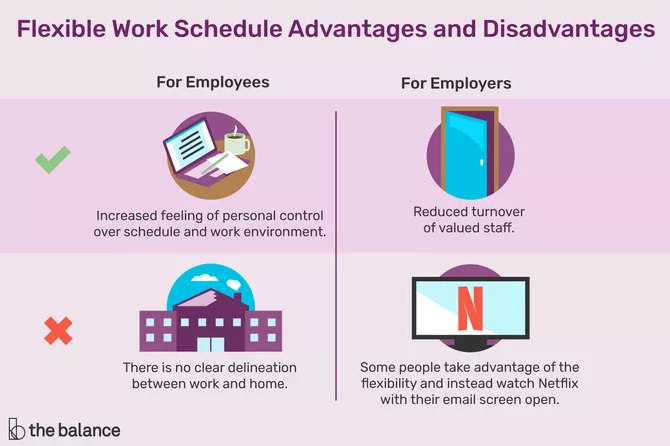
Often the benefits of having our teams on inflexible arrangements are taken for granted while the potential negatives are emphasized There are a number of proven benefits in providing flexibility. Flexibility offers employers a number of key benefits including:
- Enhancing workplace morale and motivating employees
- Encouraging employee loyalty
- Attracting top talent
The benefits of flexibility for employees are also compelling and include:
- Reducing burnout
- Enhancing health and wellness
- Boosting productivity
- Improving morale
- Prioritizing families
At the Canadian Workplace Culture Index, we recently completed our annual research into the state of workplace culture in Canada we asked a number of key questions about flexibility and then looked at those results through demographic lenses for ethnicity, age, location, and more. In a future post in this series, we’ll reveal some of the key insights and differences for Canadians when it comes to flexibility.
In part two of this series, we’ll explore exactly what flexibility means and what it looks like in practice. Here’s a preview of what we’ll explore in part three, the data on flexibility for Canadians. As you review these results consider the nature of the different types of employment that men and women make undertake in Canada. Men report having more flexibility in only one way when they work.
How are you experiencing the benefits of flexibility individually or in your team or workforce?
Company Culture Begins During Recruiting and Onboarding

In the current employment market, company culture is an important differentiator for organizations looking to recruit and retain top talent. While this fact is well known, employees continue to feel overlooked, unappreciated, unheard, or even bullied. Companies, particularly in the tech sector, that work to foster a positive company culture will reap the rewards, experiencing improved recruitment and retention, higher morale, better teamwork and increased productivity.
A positive company culture, however, cannot simply be willed into existence. Each day, it must be defined, fostered, lived, demonstrated, and communicated. For new employees, this process doesn’t begin on day one, it actually starts much earlier.
Company Culture and the Tech Sector
The tech sector’s influence on company culture cannot be overlooked. Images of hoodie-wearing CEOs or high-paid employees huddled around the foosball table first served as fodder for pop-culture parody but were actually indicative of things to come. In the broader labour market, work-life balance has increasingly been prioritized by employees, while companies recruit for soft skills in an effort to foster a culture of collaboration and communication.
Defining Your Company Culture
It’s imperative that company culture be communicated to new or potential employees, but before this can be done it must properly be understood internally. Leadership should discuss it openly, and consult with employees throughout the company.
Does current practice align with stated goals? Oft-competing values and variables such as work-life balance, innovation, teamwork, process, chain of command, individualism and the leeway to experiment should be addressed openly and honestly. This clarity will inform the recruitment and onboarding processes.
Communicating Company Culture to Candidates
It is important that recruiting with company culture in mind does not become confused with recruiting for homogeneity. In one well known case study from the UK, a company removed all identifiable information including names and age from applicants’ submissions and kept things like hobbies. The existing team were largely cyclists and their human proclivity to homogeneity showed through as most new hires going forward were also cyclists. Study after study shows the cultural and economic value that diversity of culture and thought brings to the workplace. What is important, however, is that candidates are given a true description of what they can expect when they arrive.
Technology workers are often drawn to innovative, fast-paced environments, but this does not make them immune to burnout. What measures does your company take to ensure balance? Only when this is communicated accurately can both sides truly decide whether there’s a good fit.
Job descriptions must also be carefully constructed. Those who arrive at work and are surprised by the day-to-day nature of their job may be disillusioned, leading to poor morale and high turnover, to the detriment of the company as a whole.
Companies should develop unambiguous materials to showcase company culture in advance. This is done in two ways. First, the things within an organization’s control such as their website, careers page, job descriptions, and social media content they put out. Secondly, the things outside of an organization’s control must be considered, these include third party employer review sites like Glassdoor, employee social media, and product and service review sites like G2.
Ensuring that an organization is aware of these areas is especially important so you don’t get caught unaware by a well-researched and important hire. Many hiring managers will address negatives directly while aligning expectations with internal realities. Doing so will not only help both parties avoid disappointment, but can help the company stand out from their competitors and attract the interest of more high-calibre candidates.
Recruiting and Interviewing for Soft Skills
Recruiters have come to realize that it’s easier to retool for hard skills such as technical know-how than it is to instill qualities such as patience, communication skills, and the ability to work in teams.
Companies that know what so-called ‘soft skills’ they’re looking for in a candidate should be open about it with candidates and in job descriptions. Additionally, psychometric testing is being increasingly used to determine what personality traits candidates will bring to the table. This is another way companies can be proactive about company culture.
Promote Teamwork and Communication During the Onboarding Process
Companies that value teamwork and collaboration should demonstrate this during the recruitment and onboarding stages. Having candidates meet team members from various departments will give them a greater sense of company culture and will provide the company with additional perspectives on the candidates.
After hiring, new employees should be provided with information about the internal communications process and what resources are available to them should they have questions. Mentors and ‘onboarding buddies’ are valuable in helping people learn the ropes and develop professionally, both technically and culturally.
The more individuals a new hire meets in the early going, and the more they learn about the collaborative environment, the better equipped they will be to contribute to the team as a whole.
Company culture can no longer be considered a backburner issue, or something that just happens organically. Forward-looking companies in sectors such as tech will benefit greatly when the culture of their workplace is optimized for innovation, problem-solving, and collaboration. Working to achieve this is not an event, but an ongoing process. The earlier it begins, the better, especially for new hires.
Kemp Edmonds is the Managing Director of The Canadian Workplace Culture Index.
Workplace Trends Impacting Tech During The Great Resignation

Canada’s tech industry continues to grow, as does its need for talent. According to a recent report by the Innovation Economy Council, the Canadian tech industry lost a big portion of its international tech talent due to pandemic border closures. Now Canadian companies are struggling to attract foreign talent to move North.
Understanding the trends impacting the workplace and the labour market is fundamental to remaining competitive in both recruiting and retention.
Decrease in Foreign Talent
Before the pandemic, international talent was flocking to Canada’s booming tech sector. Toronto had the second-largest talent boom next to Silicon Valley. Employees were becoming more and more attracted to Canada due to the country’s diverse and open reputation. However, the pandemic forced international borders to close for an extended time, causing this boom to slow down.
The pandemic also led to a large-scale career reconsideration, with record numbers of workers voluntarily leaving their positions. Reasons include backlogged retirements, burnout, trepidation over returning to the office and general ‘pandemic epiphanies’.
Recently, we at the Canadian Workplace Culture Index partnered with the Angus Reid Institute to poll employees across Canada from workplaces of various sizes and industries. One particular finding jumps off the page: 60 percent of respondents indicated that a 10 percent raise would sufficiently entice them to leave their current job for the same position elsewhere. Needless to say, this is a very concerning situation for CEOs.
Company Culture
Company culture can be a differentiator if it’s prioritized. Unfortunately, many companies seem unable or unwilling to do so. Thirty percent of respondents believe that people get away with bullying in their organization, while more than a third think that senior managers don’t make an effort to listen to, check in, or connect with employees.
Many companies find themselves in a vicious circle: exits leave them short-staffed, which leaves remaining personnel to deal with increasing workloads, leading to further burnout and more exits.
The tech industry is certainly not immune. While there may be no magic solution, communication goes a long way. Dialogue and resources surrounding mental health and Justice, Equity, Diversity and Inclusion (JEDI) send a powerful signal to employees and can move the needle on company loyalty.
Remote, Hybrid and In-Person Working Models
Some prefer working from home, while others thrive in an office environment. One thing is for certain: everybody now has an opinion. Companies that lack flexibility will find themselves at a competitive disadvantage when recruiting.
Tech is ahead of the curve in this regard, with many in the industry already accustomed to remote work. While those in other industries fumble around with Zoom buttons, it may not be technical aspects that create a challenge within tech, but cultural ones. Communication, collaboration and teamwork are key, and companies must find successful approaches to facilitating them remotely.
Another consequence of the remote workforce is the untethering of physical proximity from recruiting. As a result, compensation expectations will become de-linked from geography.
Managing Five Generations of Workers
Traditionalists, Baby Boomers, Gen X, Millennials and Gen Y are all present in today’s workplace. While tech is forward-looking by nature, it’s important to establish mentorships and facilitate the exchange of knowledge.
Equally important is providing each generation with a fulfilling environment. For all of the discussion surrounding generational differences, studies show that the desire for flexibility, work-life balance and employers who reflect employee values spans generations.
Evolving Benefits and Perks Paradigm
Benefits packages are becoming increasingly personal. Investment matching, personal development programs, home office budgets, child care and flexible vacation packages are among popular perks. When competing to recruit and retain top talent during an employee’s market, nothing is off the table!
Soft Skills are Hard to Ignore
It goes without saying that the technology industry requires technical skills. What’s also irrefutable is that much of this specific know-how has a shelf life. Like those in other industries, tech companies are wisely emphasizing softer skills such as communication, organization, problem-solving, project management and resourcefulness. Technology may impact the day-to-day operations of the workplace, but these aptitudes will continue to be relevant.
Though not simple, the path forward to creating a workforce that is resilient against the factors that have led to workplace attrition boil down to creating a bond between company and employee. Team members want to feel appreciated through salaries, creative benefits packages, JEDI initiatives, flexibility, and two-way communication and they want to know that the companies that they work for prioritize work-life balance and happiness. Those that do these things will position themselves as leaders in recruitment and retention.
Assessment and certification processes, like the ones we conduct at the Canadian Workplace Culture Index, can help measure and improve company culture. While there are unique challenges affecting today’s workplace, staffing chief among them, there are also incredible opportunities for those who rise to the challenge.
Kemp Edmonds is the Managing Director of The Canadian Workplace Culture Index.
Ideas Are Virtually Worthless

We have all discussed great ideas with friends, family members, coworkers and acquaintances. A lot of folks think they've got the next big thing rolling around in their heads. I once thought that but I was living in a fantasy and was in my early twenties. Are those the same thing?
Ideas are meant to be set free
Sometimes people want to have signed non-disclosure agreements(NDAs) before talking about their ideas. Those NDAs are easier than ever thanks to services like Contractually so that's not the same issue it once was. This philosophy of coveting ideas has always stuck with me when it comes to coveting ideas...

This rings true with one of my personal philosophies about writing, publishing and blogging: If you don't share your knowledge no one will know that you have it. Another personal philosophy I've developed that I share with anyone willing to listen is that ideas are worth 1% and execution is worth 99%. This makes some people a bit sad but it rings true for everyone.
Execution isn't everything
The missing ingredient in my formula was something akin to timing but not quite. Something akin to market fit but not quite. I found my answer after reading another post on LinkedIn from David Allison about the idea that everything at work and in our personal lives should go through three stages: Vision. Alignment. Execution. Alignment is the missing ingredient. Whether we are deciding where to go on our family vacation, where to go for lunch or which software solutions to purchase as a company to execute successfully on our vision or idea we much find alignment before we execute.
Ideas are virtually worthless

I'd love to hear your thoughts, scathing reviews, corrections, ideas and questions.
Additional Reading: Ben Parr's astute assessment of the question: "I am creating the next Facebook and need funding. What steps should I take next?"
Case Study: Facebook & Labour Law in Canada
This incredible story begins in Edmonton when a veteran worker began posting to Facebook about their direct management. Sometimes while on the job and sometimes from home.The statements were 'offensive' according to some sources. The employee may or may not have known but all of their posts were public based on their profile settings at the time.


The posts referred to one of the supervisors as "evil," a "bitch," a "hag," "C_unt" and "the devil". The other supervisor was characterized as a "yes man" and an "idiot". The posts also contained threatening language such as "DIE BITCH DIE" and "WRONG AGAIN BITCH you gonna be the one missing PERMANENTLY" - Field Law's Workwise Newsletter.Around the same time... beginning in June of 2009 Facebook started experimenting with changes to the site that were altering user's privacy settings and started new users with 'open' profiles by default:
- The Day Facebook Changed Forever: Messages to Become Public By Default -ReadWriteWeb, June 24th, 2009.
- More Ways to Share in the Publisher -Facebook Blog, June 24th, 2009.
- Facebook Privacy Changes Go Live; Beware of "Everyone" -PCWorld.com December 9th, 2009.
Around this time I began working at BCIT and was appearing in the media speaking about the barefoot bandit, political social media gaffes and social media charlatans. I had also been lucky enough to develop courses at BCIT. These things and a strong LinkedIn profile along with an honest and transparent online persona spurred a law firm in Edmonton to reach out to me.
The conversation was interesting to say the least. The information communicated to me demonstrated that the need for individuals with the knowledge and skills to discover information about social networks in these types of cases is large and growing. Young lawyers may have used Facebook or Twitter since they were teenagers but they don't necessary understand these networks in enough detail to be of assistance in these detail orientated cases.
The work was around what's called an agreed upon 'Statement of Facts' that both the griever and the defendant agree to. I was tasked with analyzing and creating an accurate statement about the state of Facebook at the time of the incident. If the grievor challenged any items in the Statement of Facts I would be required to take the stand as an expert witness. This was an interesting position to be in. The other lawyer would be challenging me as an expert in the field while I was on the stand. The grievor eventual agreed to the 'Statement of Facts' and I wasn't required to testify.
I'd love to talk more about my opinion on the case and the circumstances surrounding it but I am unable to comment on the specifics of the case at this time as the decision may be subject to a judicial review(an appeal). It is therefore not appropriate to publicly provide my opinion on the outcome of the decision. Although I can share with you the case study as published publicly by the law firm I worked for. They also quote some of the posts made by the employee on the first page. Be sure to read it through as it is extremely insightful and interesting.
This emerging and interesting new field of the law has definitely gotten me excited to do more work like this. It also spurs some interesting questions for me: What is an expert? What is a reasonable person? How would a reasonable person be expected to understand Facebook's privacy settings? Questions abound, but more importantly what do you think of the case?
Invasions of Privacy: Facebook Employee Passwords
You're in a job interview; nervous and optimistic, when suddenly you are asked to hand over your personal phonebook, diary, scrapbook and family correspondance....

“I think it’s very dangerous and unnecessary to start asking people for access into their personal lives. Once you start asking people to reveal everything about themselves, which is irrelevant to their ability to be able to do a job, you are getting into a tricky area. It’s the equivalent of getting people to spy on prospective staff down at the pub before hiring them. It’s also quite a lazy way by bosses to get a full picture of somebody and shows that their interviewing process is unsatisfactory.”
- Sarah Veale, Head of Equality and Employment Rights, Trades Union Congress.It's a quagmire for both employees and their employers. Both groups should be most concerned with
what can be seen by others on the Facebook page. A simple Facebook search can help with that. Organizations shouldn't be asking employees for this information unless it pertains directly to the job or the employee has/is publicly bashing employers past, present or future. What matters is:
- Is the employee publicly connected to the organization?
- Does the employee talk about specific work related business on Facebook where others can read it?
- Does the use of Facebook effect the relationship between the employee and their work?
Saying yes to each item makes what is done publicly matter to the organization and for good reason. Organizations are overreaching requesting administrative access yet potential and existing employees are not getting hired and losing their jobs. Facebook has chimed in on the topic and in no uncertain terms says that it doesn't support this practice:
I will soon be publishing a case study I worked on recently where an employee was fired for what they posted on Facebook. The dismissal was supported by a ruling by an outside arbitrator. Asking for your Facebook login and password is a preventative measure in the minds of some of those who ask, but surely over steps the bounds of human rights and common decency. Would you want to work for an organization that demanded your login and password for Facebook?
"In recent months, we’ve seen a distressing increase in reports of employers or others seeking to gain inappropriate access to people’s Facebook profiles or private information. This practice undermines the privacy expectations and the security of both the user and the user’s friends. It also potentially exposes the employer who seeks this access to unanticipated legal liability.
The most alarming of these practices is the reported incidents of employers asking prospective or actual employees to reveal their passwords. If you are a Facebook user, you should never have to share your password, let anyone access your account, or do anything that might jeopardize the security of your account or violate the privacy of your friends." - Facebook.comIn the United States spotlight grabbing politicians are pushing the Feds to investigate this issue. Some originally insinuated that Facebook would take legal action against employers who asked for logins and passwords. This was recently rebuffed by Facebook. According to some less sensational reports the practice is pretty rare, for now. In Canada the practice may be even rarer as the Canadian Charter of Rights and Freedoms prohibits this type of request based on discrimination. According to the Spec:
"There is no law that particularly prohibits an employer from asking for that password. It does not specifically violate any privacy legislation. But, by asking that question, employers expose themselves to complaints of discrimination under human rights legislation.
Both the Ontario and Canada human rights legislation prohibit discrimination in employment on the basis of, among other things, race, ancestry, place of origin, ethnic origin, citizenship, creed, sexual orientation, age, family status, marital status or handicap. That’s a long list of things you wouldn’t usually learn during a job interview. It is contrary to human rights legislation to ask questions with respect to these issues." - TheSpec.com
Maturing at the Lectern: Confidence
 |
| photo by: @jeremylim |
The following presentation was prepared as a Professional Development lunch and learn for a real estate development firm in Vancouver. The audience was great and the boardroom was packed full. The presentation has a Personal/Professional Development focus. This presentation was created from scratch specifically for this purpose.
Google+ Copies Facebook: Or is it Us?


Besides having the heads positioned in an opposing fashion there is little to nothing that's different about these two profiles.
Similarities
- The new 'banner' image is fully replicated.
- Vitals directly below the profile pic.
- The tabbed options look and function similarly but there are different.
- Timeline style profile - industry standard.
- Positioning of the top right settings and account menu - industry standard.
- Position of logo on the top left - industry standard.
- Position of search field: this is an industry standard.
Differences
- Where Facebook has ads; Google+ has ominous white space.
- Google+ has profile style tabs; Facebook integrates that into an extra row on the profile.
- Google+ clearly displays the nav bar on the left hand side - industry standard.
Are we as humans that predictable that everything on the top of a web page should obey a certain order? Maybe, yes. Are we heading to a face off between these platforms? Yes. May other platforms out there be different and present differently? Yes. You be the judge of the majors by telling me - @kempedu - if you believe LinkedIn or Twitter are operating on the same user design principles for profile pages.


Users Rule

Research: Building on Shared Experience
 |
| Hand talking |
If you are delivering a presentation to a group it's best that you take the time to learn about them and learn as much as you can. Tailor your message for that group and understand them enough so that you can make the experience special for them and yourself. Also keep in mind that your assumptions may not be accurate. Gauge your audience before you begin. This can be done by tracking a #hashtag at an event, sitting in the audience listening to the chatter or meeting and mingling with people when possible.
I watched one of the internet's top speakers give a talk in Vancouver last year. It was sad to watch as they fell on their face with a poorly planned talk that meandered aimlessly and talked down to the audience. At one point the speaker said that it was best to dress like your audience. If you are under-dressed it looks like you don't respect your audience while if you are over dressed it can look as if you are superior to them. The funny part was that this speaker was under-dressed therefore insinuating that they didn't respect us. This speaker has one of the most powerful voices in the social web; yet misses connecting genuinely with their audience in real life.
For me connecting with your audience, understanding them and being able to change your presentation on the fly to move with them help guide presenters to effective public speaking. Recently I had the opportunity to present one of my main talks to students at Kwantlen University. This is an evolving talk that I've given three or four times now. When using material that's been presented before customization is essential.
I recently spoke with a higher educational institute in a particularly unusual position. They are a satellite of a much larger entity that is based in another country. They cater to a large number of students from outside of Canada and they have an amazing location with a solid educational programs.
Speaking: The greatest audience is the toughest crowd
I love speaking. To any audience. Whether they love what I am saying or don't get it I learn an amazing amount about myself and about other people everytime I have the opportunity to speak in front of more than a few people. When different groups ask me to speak I am quick to accept which often makes for challenging times; both in regards to the availability of time and the time to prep for your audience.
This summer I was lucky enough to speak to a variety of different groups. Two audiences really stuck out for me this Summer. One was possibly the toughest audience I've spoken to and the other may have been the audience I was most nervous to speak with.
This is being published late, but I am fired up to deliver Fall highlights in a post soon. Leave me your feedback or queries always up for a good thought.

TMI: Too Much Information

Decades ago (2 or 3 decades to be exact) we couldn't get enough information. When the Encyclopedia Britannica person came to our door we couldn't wait to buy the $1000+ set of soon to be outdated books.
The world has changed. I remember over a year ago when I turned a fellow instructor at BCIT onto Twitter. He was super excited to start. He couldn't get enough. When he didn't have time to read stories he would 'favourite' them on his Twitter app. One day he turned to me in passing and said, "Hey, Kemp when do I read all these great stories I found on Twitter?"

"It's time to give up," I said.
It was true. He had to change the way he thought about information. We all do in a world where we can search for the latest links on education in an instant. I had thought him how to tap into the latest news on social media, technology and digital media, but was it for the better? Or for the worse? He now had access to more information than ever before but he had to sift through it. He had to evaluate it and he had to decide if it was worth his time to read.

The reality like my current favourite read: "The Shallows" states quite clearly is that our brains are going through a transitional phase. We are building new pathways to move from spending tons of time in the stacks finding relevant information in books. To moving through the digital stacks learning how to find, filter and evaluate information. This is our future or the future of our media consumption.
More than a year ago when I was employed part-time or a student I had time to do these three vital tasks: find, filter and evaluate. Now that time no longer exists. I rely on Techmeme, SmartBrief, Summify and others to do those tasks for me. Lucklily for me they do a damn good job.
What will the future hold? As many have said the ability to curate and filter the best content will remain vital for people like me. But who will do the best job and as a recent article in Wired stated can a computer do it for me based on my previous posts to social networks like Twitter and Facebook? I sure hope so because I don't have the time, but I need someone to do the job. If you have anything to add I am dying to hear it so don't hesitate to tell me how you deal in the age of Too Much Information.
The State of WebTV in Canada, Part II: In the Trenches
 |
| Newcomers take aim at the incumbents |
If you never watch TV and you are still reading this post I salute you! I've spoken previously about the big three network holders in Canada: Rogers, Bell and Telus affectionately known at Rogebellus by some. Others add regional players Shaw (West) and Quebecor (East). This is the reality. It is not a problem. These organizations exist the way they do partly because as Canadians we built them to and we need them to or think we do.
Web television in Canada has come of age although it suffers from major flaws. Each of the Cartel members has associated content networks and broadcast channels, but they don't share; for the most part they covet and hold onto control to their detriment.
Telecommunications company Telus Corp. is urging the Canadian Radio-television and Telecommunications Commission not to allow its competitors to horde the content for the exclusive use of their subscribers. The company is the only one of the major telecommunications companies that does not hold television networks as part of its assets. This year, Bell Canada Enterprises Inc. bought the television network CTV, while last year, Shaw Communications Inc. purchased the television and specialty channel division of Canwest Global Communications Corp. -4.28.11 Source.
The federal broadcast regulator moved to block telecommunications companies from locking up their video content for their own wireless subscribers. -3.7.11 Source.
This is the biggest problem we are going to face in the future. In the US because of the vastness of the country and the multitude of providers this problem doesn't exist in the same way. Yes there are large content networks but they don't own all of or almost all of the means of distribution. In Canada the cartel does own those networks and they use that power to hold Canadians to the fire regularly.
Any Canadian internet connection/IP address in Canada can go onto CTV.ca, GlobalTV.com, MTV.ca or CBC.ca and watch any program that is made available on demand. Sure the quality isn't HD, the ads are incredibly repetitive and sometimes it stops working in the middle of show. On the other hand I don't have to watch 3 minutes of ads, I can watch programs whenever I want and only have to be able to access the internet to do it. This is the reality modern people want. Our lives don't dictate availability at certain hours. We are dedicated to them. If you want people to watch your content make it accessible and charge a reasonable price.
There is freedom given to the viewer by PVR, Netflix and other ways of viewing media on your own schedule. This is what iTunes, Amazon and others who are making serious gains understand: the delivery system is just as much, if not more important than the item of delivery. Most media companies have realized this and they are turning the corner but what the future holds is uncertain and none of us can predict what will happen.
In part three of this series we'll chat about the current realities and possible futures of the state web television in Canada. In light of SOPA, PIPA and Bill C-32 concerns are growing about the state of freedom on the internet and how that effects all internet users. Canada continues to exist as an experiment in telecommunications marred by challenges. I love my country. I love my Canadian telecomms. At this point I wouldn't have it any other way. Can it get better? Yes. Will it? I and many others have already given up cable and a home phone line.
It already has.
There is freedom given to the viewer by PVR, Netflix and other ways of viewing media on your own schedule. This is what iTunes, Amazon and others who are making serious gains understand: the delivery system is just as much, if not more important than the item of delivery. Most media companies have realized this and they are turning the corner but what the future holds is uncertain and none of us can predict what will happen.
In part three of this series we'll chat about the current realities and possible futures of the state web television in Canada. In light of SOPA, PIPA and Bill C-32 concerns are growing about the state of freedom on the internet and how that effects all internet users. Canada continues to exist as an experiment in telecommunications marred by challenges. I love my country. I love my Canadian telecomms. At this point I wouldn't have it any other way. Can it get better? Yes. Will it? I and many others have already given up cable and a home phone line.
It already has.
Sharing Information + Diverse Audiences
more presentations from kemp edmonds
I recently had the pleasure of presenting (slidedeck above) at a one-day conference in Calgary called Social Media Marketing Unplugged. The organizer Jonathan Chow was an awesome organizer and the other speakers were people who I admire personally for the work they do in their areas of focus. It was my lucky day as having recently started working a dream job of sorts with HootSuite, THE social media dashboard, managing their learning program I was invited to fill in for my community wrangler Dave Olson.

It was a joy to present outside of Vancouver and in another Canadian city. It was very different from Vancouver where the use of social media is more prominent. Ask anyone who speaks regularly to audiences about social media and you will find out that the greatest challenge we deal with is the diverse knowledge base of our audiences. Some are 'going to try Twitter soon' while others are tracking website visitors' every move using Custom URL parameters and Google Analytics. If you didn't understand that last part don't worry few do, but it's the kind of technique that is basis for successful online communications. Sharing knowledge is an amazing part of digital culture in fact it lives at the core of our culture.
Kris Krug, Open Everything, Pecha Kucha.
Without sharing knowledge and allowing others to build on it we would not be where we are as a civilization. We would be stuck in the past. I've been inspired on my mission to share the knowledge by two individuals who started out as my heros and long ago became my mentors, my peers and my friends. Kris Krug and Dave Olson speak the gospel of openness.

The State of WebTV in Canada, Part I: Opening Salvos


Hulu and Netflix have been creating strong digital content distribution channels in the US for years. Netflix in Canada is like dial-up internet compared to Netflix in the US which is comparatively like ultra-fast internet connections of today. Our Netflix has almost zero new content and when movies come their either from the archives are straight to DVD. Yes there are the rare high production value films in there, but it's nothing compared to what is available in the US. This is only the start of the problems presented by the current structure of the cartel's telecommunications Oligopoly in Canada. In the next part of this 3 series we'll get into the trenches on state of web TV in Canada.
In the meantime read this follow-on post from Jesse Brown: Honour among thieves: the only way to the best selection of television show and movies [in Canada] is to steal them.
Social Media in Law: A 2011 Report

Messages we write down have been an integral part of the law since the beginning. The value of our digital trail is increasing daily. How we manage our online communications is key to steering clear of the newly formed legal pitfalls of the web.
This series of posts will focus on North America and will draw mostly on existing case law, some anecdotes and a few cases that cannot be discussed in detail due to existing NDAs. For the most part I will reference cases I have been following and how they are slowly drawing the lines in the sand around labour law, privacy and rights.
As the year progresses I will continue to keep you updated on the effects of social media on litigation both civil and criminal. I am currently working with some people who are experiencing the heavy cost of divorce in the age of digital connections by ghost writing their story. I will also explore existing intellectual property cases, discuss defamation and cover labour law in detail. I'll root out where the lines are and where they are moving by drawing on cases that are happening now.
Today I'll be giving an overview of Defamation, Uttering Threats, Insurance, Divorce and Labour.
Defamation: Anonymity Unveiled

In Vancouver in late 2010 a case regarding a beauty salon where they had to file court orders with both Craigslist and Shaw, an ISP, to find out who their anonymous online defamers were. Both Craigslist (handed over the IP addresses) and Shaw (handed over the customers names associated with those IP addresses) have complied with those court orders. -Anecdotal at this time.
Whether it's magicians in Vancouver, Courtney Love or two organizations trying to help dogs the age of internet defamation and the resulting lawsuits is upon us. Here's a great overview from a lawyer about how defamation works in the law. Remember legal claims of online defamation are on the rise.
Uttering Threats, Digitally

In January of 2010 Paul Chambers, 26, was supposed to fly out of Robin Hood Airport in the UK when his flight was canceled. He went to Twitter to vent his frustration about the closure of the local airport. He was headed to see his internet girlfriend in a tropical location when ash from a volcano in Iceland postponed his trip.
 |
| The tweet that cost $6000 |
Uttering threats on Facebook is dangerous business as one Montreal man found out in the Fall of 2010. He also showed that when uttering threats online it's best not to be doing other illegal things. In 2008 a Canadian student was charged with uttering threats for posts he made on an internet forum threatening violence against his school.
The lesson? Threats on social networks must be treated as legitimate by authorities. Hide your tweets by making them private or don't tweet threats. Most of the answers to how to avoid the pitfalls above is 'common sense'. The challenge is that many people aren't aware of those things. Worth studying.
Insurance Fraud?

Insurance lawyers are accessing Facebook photos more tenaciously than is imaginable and have been since before 2008. One of the most famous cases in Canada started in November 2009 and involves Nathalie Blanchard who had been out for a year-and-a-half on paid long-term sick leave (disability) following a diagnosis of severe depression. Then her insurance company, Manulife, got their hands on some photos she had posted to Facebook. The photos show her smiling while at a birthday party in a strip club and on a vacation on the beach.


Manulife took these photos to mean that she was no longer depressed and able to work. Blanchard responded by saying that she was 'happy in the moment, but before and after I have the same problems'. The video below runs through the whole story if you'd like more details and some honest opinion.
How did they see those photos when her profile settings were totally private? She had made them her profile pictures something that Facebook lets anyone on the internet see. More information: Depressed woman loses benefits -November 2009. Depressed woman fails first try to recoup benefits -December 2009. Related: Manulife posted $1.8 billion in profits for 2010.
According to the Telegraph using social networks could eventually raise your home insurance premiums in the UK by as much as 10%. This is because people who use these networks are seen as 'more at risk' to be broken into due to their posts. For example, if you checkin to FourSquare you most likely aren't at home.
I have searched for more stories about insurance, law and social media but haven't found much more. Although there is even more cases like this out there. Where are they? Please Tweet @KempEdmonds or leave the links in the comments, thanks!
Divorce in the Social AgeI have searched for more stories about insurance, law and social media but haven't found much more. Although there is even more cases like this out there. Where are they? Please Tweet @KempEdmonds or leave the links in the comments, thanks!

Facebook is a divorce lawyer's new best friend
Facebook doesn't cause divorce- spouses do
Divorce attorneys catching cheaters
Wife betrayed on Facebook: "Terrible beyond belief."
Facebook and divorce airing the dirty laundry
Most of the existing stories about the use of Facebook in divorce is around catching cheaters. This is a strong investigative use for lawyers in a bitter divorce battle. Divorce and separation online is a touchy and challenging new dynamic in our social structure. I can't begin to imagine factoring in children. When I dig more into divorce I am going to try and talk about it from a few different angles.
While I am covering divorce later on in this series it will be about the human story of creating intertwined lives and social networks and then going through a divorce. What do you do? Unfriend everyone? Don't post anything about your feelings during the divorce? There are no easy answers to this new challenge that faces those who are divorced in the age of Facebook.
Part two will be coming soon!
Subscribe to:
Posts (Atom)


